Almost every basement has a crack somewhere. Most are not structural. Here is how to sort them.
Direction matters more than size
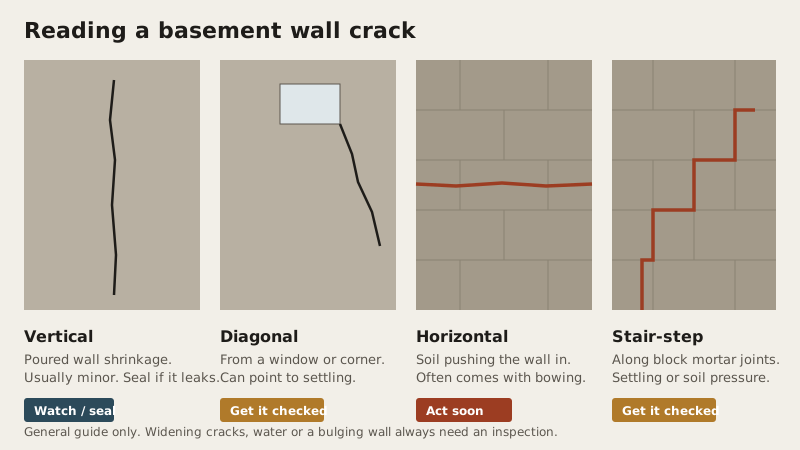
| Crack | Usually |
|---|---|
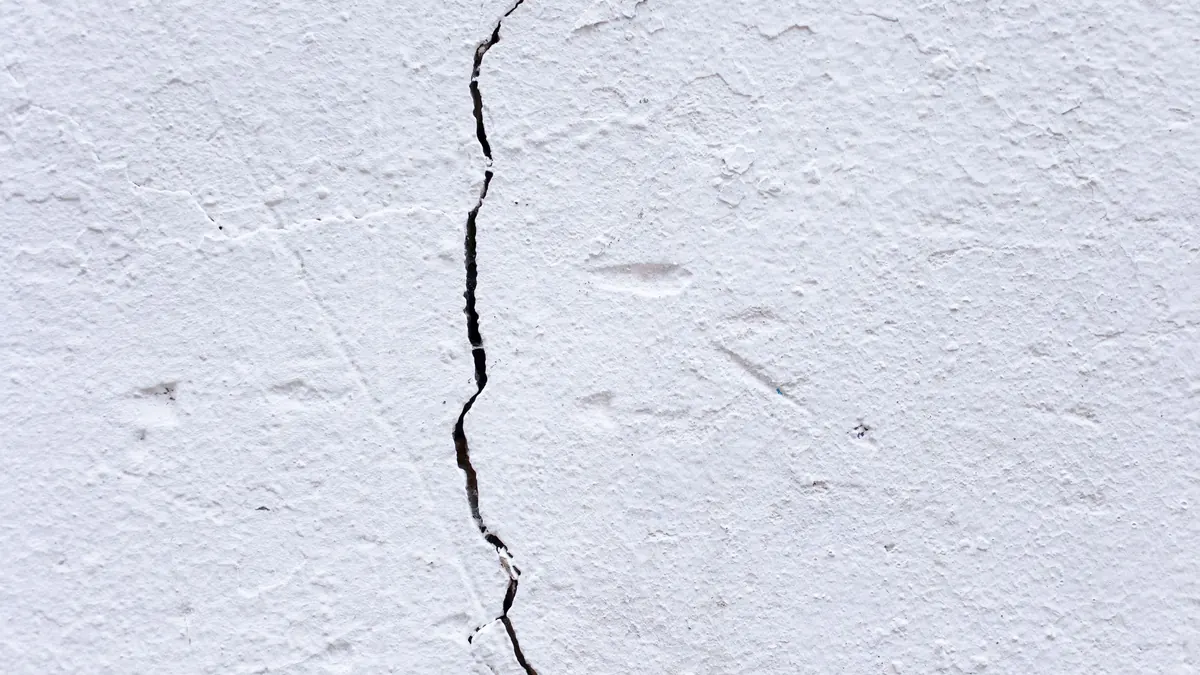
| Thin, vertical, in poured concrete | Shrinkage. Common and usually harmless unless it leaks |
| Diagonal, from a window or corner | Stress at a weak point, sometimes settling |
| Horizontal, in block or poured wall | Soil pushing the wall in. Get it inspected |
| Stair-step along block mortar joints | Settling or soil pressure. Get it inspected if the wall bulges |
A thin horizontal crack can matter more than a wider vertical one.
Signs a crack is serious
- It is getting wider or longer.
- It is wider at one end than the other.
- The two sides are offset, with one sticking out past the other.
- The wall bulges or leans near the crack.
- It comes with sticking doors, sloping floors or new drywall cracks upstairs.
- Water comes through it.
How to monitor a crack
- Mark both ends with a pencil line and write the date.
- Measure the width at its widest point. A coin or a cheap crack gauge works.
- Take a photo with a ruler next to it.
- Check again every month or two, especially after spring thaw.
If it grows, or any sign above shows up, have it inspected. A crack that has not changed in a year and stays dry can usually just be watched.
What fixes it
Leaking cracks are sealed by injection. Cracks caused by movement need the cause fixed first: bracing for bowing walls, piers for settling. See foundation repair and bowing basement walls.
Free inspection in Grand Rapids and nearby cities
A licensed local contractor looks at the problem, explains the options and gives you a written quote. No obligation to hire.